

Director: Zhong Weimin Phone: 021-64252640 Email: wmzhong@ecust.edu.cn
Contact: Ding Weichao Phone: 021-64252911 Email: weich@ecust.edu.cn
I. Introduction to the Research Station
The Postdoctoral Research Station in Computer Science and Technology is based on the Computer Science and Technology discipline at East China University of Science and Technology (ECUST). This discipline has a long history. It was approved to confer doctoral degrees in Computer Application Technology (a secondary discipline) in 2006 and was authorized to confer first-level doctoral degrees in Computer Science and Technology in 2021. The station boasts numerous research bases with excellent research and industrial application conditions. Over the past three years, in-progress national-level government-supported research funding has exceeded 60 million yuan, demonstrating strong research capabilities. In the last five years, it has received 17 new provincial/ministerial-level awards, been granted 29 invention patents, and published over 600 SCI-indexed papers, reflecting outstanding achievements. The faculty includes 26 professors, 16 associate professors, and 24 lecturers, among whom 26 are doctoral supervisors. This includes 3 recipients of national-level high-caliber talent awards and 3 recipients of national-level young high-caliber talent awards.
In accordance with national medium- and long-term development plans and aiming to serve the major needs of national and regional economic and social development, the research station focuses on addresing key scientific and technological bottlenecks in computing. It targets international disciplinary frontiers, consolidating advantageous research directions such as Artificial Intelligence and Machine Learning, Trustworthy Software and Systems, Big Data Analysis and Applications, Large-Scale Parallel and Evolutionary Computing, and Intelligent Computing and Optimization. It is committed to the deep integration of new-generation artificial intelligence technologies, the new-generation information technology industry, and the digital economy. Leveraging the university's educational strengths and characteristics, it aims to build a research-oriented discipline, cultivate high-level talents, achieve a series of high-visibility scientific research and teaching results, and make significant contributions to the economic and social development of the nation and Shanghai.
II. Secondary Disciplines and Research Directions
(I) Artificial Intelligence and Machine Learning
Aligned with national strategic layouts and industry demands and grounded in artificial intelligence theory research, this direction targets international academic frontiers. It focuses on research in practical scenarios such as large-scale models, big data and scene understanding, speech emotion recognition, image analysis, and smart healthcare. Examples include federated learning, incremental learning, and few-shot learning. Through the optimization and improvement of algorithms, it aims to enhance their accuracy and efficiency while applying them to practical problems such as classification, prediction, and decision-making to verify their effectiveness and practicality. In conjunction with the latest advancements in deep learning technology, it researches the structure and optimization methods of deep neural networks. By constructing more complex neural network models, it seeks to improve the performance of tasks like image recognition and video analysis, providing solutions for practical problems in fields such as intelligent manufacturing and smart cities. Integrating knowledge and methods from multiple disciplines including computer science, psychology, biology, and neuroscience, it conducts interdisciplinary research applied to real-world scenarios such as emotion recognition from EEG signals, clinical medical data analysis, and medical molecular omics data analysis.
Postdoctoral Supervisors: Wang Zhe, Chen Zhihua, Pan Xiaochuan, Jin Jing, Lu Xiwen
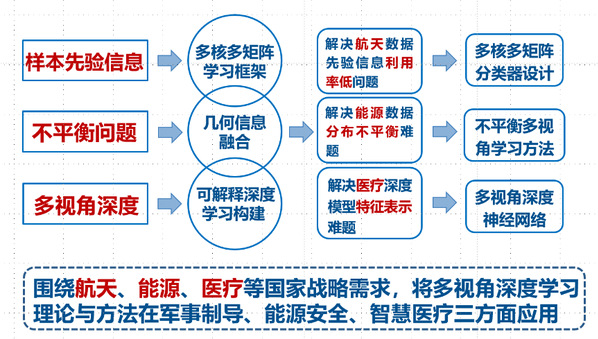
Artificial Intelligence and Machine Learning
(II) Trustworthy Software and Systems
This area focuses on the design theory and development methodologies for trustworthy software systems. Key research emphases include trustworthy software requirements analysis, software architecture, program synthesis, program analysis, as well as verification and testing techniques. It explores intelligent software development methods, search-based software engineering approaches, data-driven software engineering methods, and their associated trustworthiness mechanisms. The goal is to enhance the development efficiency and maintainability of complex software systems. Research achievements in areas such as formal aspect-oriented modeling, program synthesis, and program analysis have been applied in software automation, software configuration management, software quality assurance, and trustworthy data element flow.
Postdoctoral Supervisors: Yu Huiqun, Yang Wen, Tang Yang, Yi Jianjun, Fan Guisheng
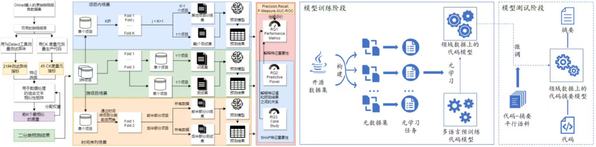
Artificial Intelligence and Machine Learning
(III) Big Data Analysis and Applications
This area aligns with national big data development strategies, focusing on the pre-training, fine-tuning, and evaluation of large models; big data acquisition, cleaning, quality assessment, governance, and data visualization; knowledge graph construction, ontology mapping, fusion, and alignment; and the study of big data visualization, as well as various application-driven mining and predictive models. Distinctive features have been developed in the construction of domain-specific large models, automatic knowledge graph construction, task-driven intelligent question answering, and data quality assessment methods. Research outcomes have been practically applied in fields such as transportation, energy, healthcare, and finance.
Postdoctoral Supervisors: Ruan Tong, Guo Yi, Shao Fangming, Qian Xiyuan, Chen Ning, Zhu Hongqing
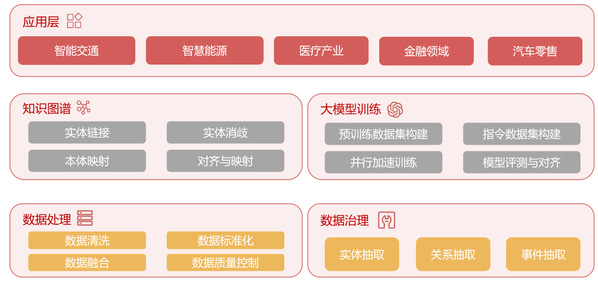
Big Data Analysis and Application
(IV) Large-Scale Parallel and Evolutionary Computation
This research area primarily focuses on the theories, methods, and technologies of large-scale parallel computing and evolutionary computation. It emphasizes the study of new methods and theories for knowledge representation, prediction, and decision-making in large-scale complex problems, as well as their application research in big data intelligence for unmanned systems. Directions include distributed swarm intelligence and evolutionary learning, reinforcement learning for optimization, decision-making, and control in unmanned systems, distributed learning and trusted intelligent computing, and knowledge-driven large models for heterogeneous computing in decision-making tasks.
Postdoctoral Supervisors: Feng Xiang, Li Fangfei, Lin Huiqiu, Liu Zhaohui, Du Wei
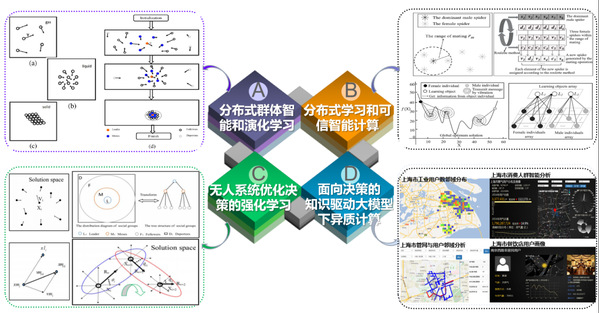
Large-Scale Parallel and Evolutionary Computation
(V) Intelligent Computing and Optimization
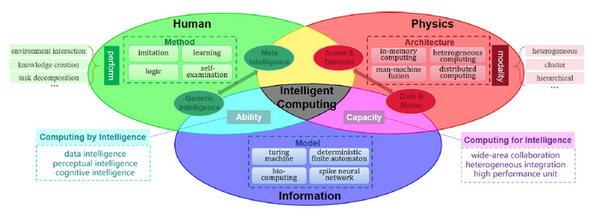
Human society has entered the intelligent era, with intelligent systems serving as the core physical carriers of this age. This research direction addresses the rapidly growing computational demands arising from the integration of Cyber-Physical-Social Systems. It focuses on the fundamental theories, methods, and key technologies of intelligent computing and optimization that support the innovative research and development of intelligent systems. The aim is to provide universal, efficient, secure, autonomous, reliable, and transparent computing services to support large-scale, complex computational tasks in fields such as computational materials, drug design, and the digital society.
Postdoctoral Supervisors: Zhong Weimin, Fan Tijun, Yan Huaicheng, Jiang Qingchao, Li Shaojun
Intelligent Computing and Optimization
