Director:Shi Hongbo, Phone:021-62452189, Email:hbshi@ecust.edu.cn Contact: Tan Shuai, Phone: 021-62453376, Email: tanshuai@ecust.edu.cn I. Introduction to the Research Station The Control Science and Engineering Postdoctoral Research Station is based on the Control Science and Engineering discipline at East China University of Science and Technology. This discipline established one of China's earliest Chemical Industry Automation programs (1952), was among the first authorized to confer doctoral degrees in 1981, and was formally accredited to grant PhD degrees in the first-level discipline in 2003. It currently includes the National Key Discipline and Shanghai Municipal Key Discipline Control Theory and Control Engineering, the first-level discipline doctoral and master's degree authorization points for Control Science and Engineering, and professional master's degree authorization points in the fields of Control Engineering and Instrumentation Engineering. In 2006, the Ministry of Education Engineering Research Center for Process Systems Engineering was approved for establishment, followed by the Ministry of Education Key Laboratory of Advanced Control and Optimization Technology for Chemical Processes in 2008. In 2012, Control Science and Engineering was included in the Shanghai First-Class Disciplines in Higher Education Institutions (Category B) construction plan. Guided by national medium- and long-term development plans and addressing major national needs, the station focuses on system integration, optimization, and control issues related to the efficient utilization of energy and resources in process industries. It has identified Whole-Process Operation Optimization and Intelligent Manufacturing, Intelligent Information Processing and Networked Control, Agile Supply and Production Chain Management and Optimization, and Safety and Environmental Footprint Monitoring, Traceability and Diagnosis as its current primary research directions. In-depth applied fundamental theory and engineering technology research is conducted around these four main areas. Since its establishment, the station has successfully supervised 73 postdoctoral alumni. It was rated Excellent in the 2015 National Comprehensive Evaluation of Postdoctoral Research Stations. Adhering to scientific frontiers and major national needs as its guide, with talent cultivation as its fundamental mission, the station persists in following an international path, strives to build a favorable soft and hard environment, provides a platform for disciplinary development, and supplies high-level talents for the country.
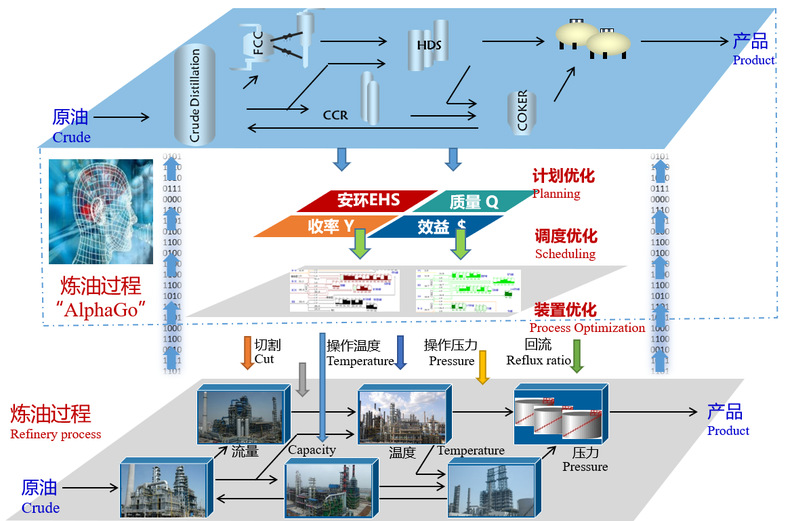
II. Secondary Disciplines and Research Directions (I) Intelligent Autonomous Control and Whole-Process Operation Optimization Against the backdrop of process industry production, this direction addresses key scientific problems in chemical production process modeling, advanced control, and real-time optimization, such as multi-source and multi-scale information fusion, hybrid description, uncertainty, nonlinearity, and large time delays. It researches theories, methods, frameworks, and corresponding engineering application technologies for process intelligent modeling, mechanistic modeling, hybrid intelligent modeling, advanced control, and real-time optimization. The main research focuses on the theories, methods, and technologies for modeling complex chemical processes by integrating first-principled knowledge and operational information, advanced control, and real-time optimization. This includes molecular-scale modeling of refining processes, multi-scale intelligent modeling of chemical processes, data- and first pinciple-driven whole-process modeling, structure-performance analysis for high-end manufacturing processes, full-scenario digital implementation and application in industrial processes, advanced control system structures and their implementation methods under comprehensive indicators, algorithms for solving complex optimization problems, process real-time optimization, and production planning and scheduling optimization. Postdoctoral Supervisors: Qian Feng, Du Wenli, Zhong Weimin, Wang Zhenlei
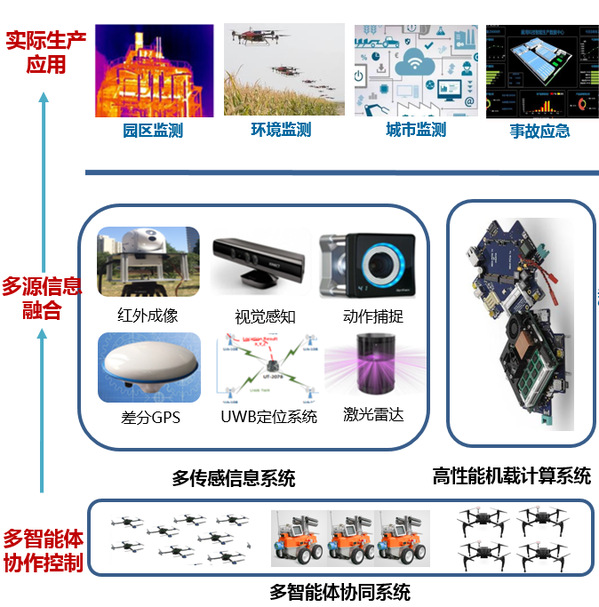
Self-control and Optimization of the Entire Process Operation (II) Intelligent Perception and Network System Cooperative Control Intelligent information processing and network system cooperative control, grounded in complex system theory and targeting international academic frontiers, conducts research on intelligent information processing and intelligent systems, networked control, brain-computer control, and complex human-machine interaction systems. Research is carried out on intelligent information processing and fusion for complex systems, pattern recognition, as well as theoretical methods and key technologies for intelligent systems, including intelligent robots and motion control systems, biomedical electronics and rehabilitation intelligent systems, etc. Addressing the nonlinearity, strong coupling, large time delays, uncertainty, and randomness commonly present in practical industrial networked control systems, research is conducted on theoretical methods for complex networked control systems. Studies also focus on human-machine integrated control systems based on human bioelectrical signals such as EEG (electroencephalogram), EOG (electrooculogram), and EMG (electromyogram). Postdoctoral Supervisors: Niu Yugang, Yan Huaicheng, Jin Jing, Yang Wen, He Wangli, Zhu Hongqing, Zhao Haitao
Intelligent Perception and Network System Cooperative Control (III) Supply and Production Chain Management and Intelligent Decision-Making With the consolidation of China's status as a manufacturing powerhouse, the management and optimization of supply and production chains have become one of the key indicators for measuring the core competitiveness of manufacturing enterprises. Companies need to formulate appropriate logistics and supply chain plans, production strategies, procurement processes, inventory policies, and other measures based on their specific conditions to gain a competitive advantage. Postdoctoral Supervisors: Gu Xingsheng, Tang Yang, Zhang Jie
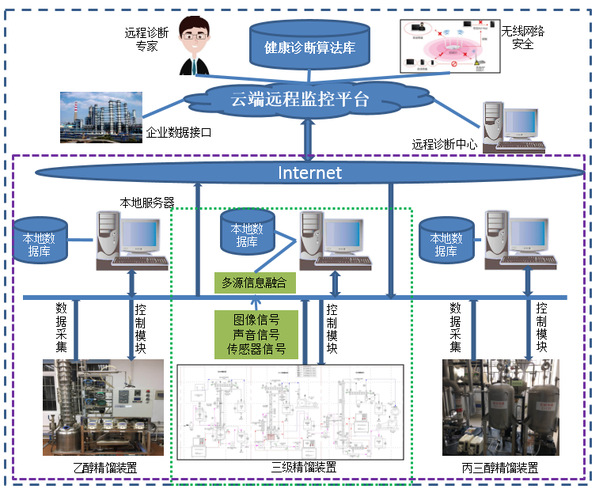
Supply and Production Chain Management and Intelligent Decision-Making (IV) Safety and Environmental Footprint Monitoring, Traceability and Diagnosis Safety and environmental footprint monitoring, traceability and diagnosis primarily focus on the theories, methods, and technologies for monitoring and diagnosing the footprint throughout the entire production and operation lifecycle of industrial enterprises. Leveraging massive monitoring data and employing information mining techniques, it monitors the impact of large-scale process industries on the surrounding environment, human health, and the entire ecosystem under different production states. It aims to identify key fault sources causing impacts and corresponding mitigation strategies, thereby establishing fundamental theories and engineering application technologies for safety and environmental footprint monitoring, traceability and diagnosis in major process industries. Postdoctoral Supervisors: Shi Hongbo, Yan Xuefeng, Ling Zhihao
Safety and Environmental Footprint Monitoring, Traceability and Diagnosis III. Talent Cultivation and Scientific Research Achievements (I) Talent Cultivation To cultivate high-level talents with innovative awareness and capabilities, this station strives to build an innovative talent cultivation system. It encourages renowned professors to recruit promising young PhD graduates from China and abroad (including international scholars from the United States, the United Kingdom, Italy, Finland, and China's Hong Kong, etc.) for postdoctoral work. A model combining innovative cultivation and practical application is adopted in talent development. This approach not only focuses on enhancing the academic quality and research capabilities of in-station postdoctoral fellows but also, by leveraging the Ministry of Education Key Laboratory of Advanced Control and Optimization Technology for Chemical Processes and the Ministry of Education Engineering Research Center for Process Systems Engineering, guides postdoctoral fellows to integrate their acquired knowledge and research achievements with practical applications. They are encouraged to apply for or undertake various scientific research projects at all levels, funding programs, and horizontal collaborations with enterprises, thereby cultivating interdisciplinary talents with innovative and practical abilities. Through the assessment of postdoctoral research performance, this station has recruited 39 postdoctoral fellows as outstanding talents into the faculty, optimizing the teaching team. To date, 2 postdoctoral fellows have received funding from the National Science Fund for Excellent Young Scholars, 2 have been supported by the Shanghai Chenguang Program, 11 have been supported by the Shanghai Sailing Program for Young Science and Technology Talents, 2 have been supported by the Postdoctoral Innovative Talent Support Program, 2 have received the Shanghai Super Postdoctoral Incentive Program, 2 have been awarded the International Exchange Program - Incoming projects, and 1 has been awarded the International Exchange Program - Outgoing project. (II) Scientific Research Achievements The station has conducted extensive research and development work on applied fundamentals and innovative technologies in the field of petrochemical production process control and optimization. It has achieved a number of landmark research results and core patent technologies with significant influence both domestically and internationally. These have been successfully applied to major chemical processes such as large-scale ethylene plants, large-scale refining units, large-scale PTA (Purified Terephthalic Acid) units, and large-scale polyester units, yielding remarkable economic and social benefits. The station has also carried out cutting-edge and interdisciplinary scientific research, making progress and breakthroughs in areas including stochastic system control, process modeling and optimization, process monitoring and health diagnosis, brain-computer interface technology, and pattern recognition. Research results have been published in internationally renowned chemical engineering journals such as AIChE Journal, Chemical Engineering Science, and Industrial & Engineering Chemistry Research, as well as in leading automation and control journals such as Automatica, IEEE Transactions on Automatic Control, Information Sciences, Journal of Neural Engineering, and Pattern Recognition. Since 2010, postdoctoral fellows (both in-station and those who remained at the university after completion) have undertaken over 40 government-granted research projects (including Key Projects of the National Natural Science Foundation of China, 973 Program, 863 Program, and National Key Technology R&D Program), with cumulative funding exceeding 20 million RMB. They have also undertaken over 40 provincial/ministerial-level research projects with total funding exceeding 8 million RMB, and more than 20 enterprise collaboration projects with total funding exceeding 18 million RMB. Several postdoctoral fellows, during their tenure at the station or while working at the university afterward, have received multiple provincial/ministerial-level science and technology awards, including the National Science and Technology Progress Award (Second Class) and the Ministry of Education Science and Technology Progress Award (First Class).
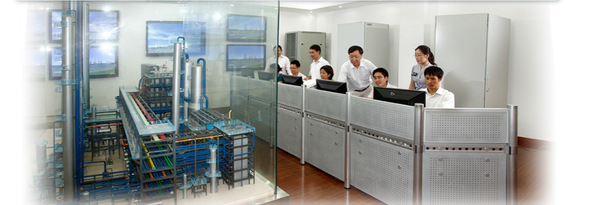
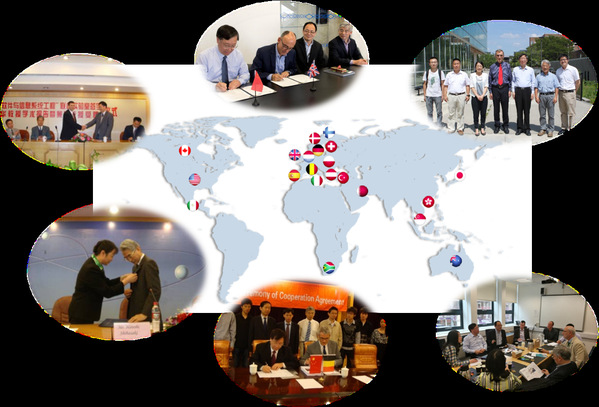
Advanced Control and Optimization Simulation Platform for Industrial Processes (III) International Cooperation and Exchange Centering on the overall development goals of the discipline, this station actively es international cooperation and exchanges. It has established a joint postdoctoral training platform with the University of Surrey in the UK to build an internationalized innovative talent cultivation system. The station encourages postdoctoral researchers to actively engage in domestic and international academic exchange activities during their tenure. Several postdoctoral fellows have conducted academic exchanges at institutions such as the Massachusetts Institute of Technology (MIT) and Lehigh University in the USA, the University of Queensland in Australia, the University of Calgary in Canada, as well as the University of Hong Kong, City University of Hong Kong, and the Hong Kong Polytechnic University, establishing connections and collaborations with internationally renowned research institutions and scholars. In recent years, the station has organized multiple domestic and international academic conferences and exchange events, including the International Workshop on Advanced Intelligent Computing and Intelligent Information Processing, the International Workshop on Advanced Control, Filtering and System Theory, and the Frontier Forum on Complex System Modeling, Control and Optimization, thereby expanding the scale, level, and depth of external exchanges and collaborations.
International Cooperation and Exchange |